Celebrate Your Ancestors on the Day of the Dead
“Suddenly all my ancestors are behind me. Be still, they say. Watch and listen. You are the result of the love of thousands.”
— Linda Hogan, Dwellings: A Spiritual History of the Living World
Listen for Your Ancestors
Psychologists now promote continuing bonds with deceased loved ones, recognizing that maintaining an ongoing relationship can bring comfort, support, and stability, especially during times of transition or hardship. Similarly, creating connection with both named and unnamed ancestors can strengthen one’s identity and foster a profound sense of belonging.
Because we live in a mobile society, many have lost their sense of place. Over the past century, some 70 million people have immigrated to the United States. In doing so, they left behind homelands, families, languages, and deep connections to their past.
And once here, the United States itself has been a country on the move. In the 1930s and ’40s, families were driven westward from the Great Plains to California by the Dust Bowl and other hardships. During the same era, six million Black Americans left the South in the Great Migration, seeking opportunity in cities across the North, Midwest, and West.
After World War II, fueled by defense spending, new highways, and postwar growth, millions more moved again. This time to the warmer climates of the Sun Belt in the South and Southwest. While census numbers are not exact, undercounting remains a persistent issue, federal relocation programs displaced millions of Indigenous people from their tribal designated lands. By 2000, an estimated 64% of Native Americans lived in urban areas, a dramatic increase from just 6% in the early 1950s.
While mobility brings new opportunities, it can also sever our connection to the bones of our ancestors. When multi-generational families are scattered, children may miss the chance to hear family stories or practice traditional rituals.
Yet the ancestors do not vanish. They linger in our dreams, appear in synchronicities, and speak in quiet whispers. Our task is to pause, to listen, and to welcome their wisdom.
The growing interest in connecting with our ancestors is evident in the popularity of companies like Ancestry and 23andMe, as well as organizations that help build family trees such as FamilySearch, MyHeritage, and WeRelate. But what if we could go beyond charts and DNA results by simply recognizing our ancestors in the stories we tell ourselves?
Ancestors and intuition are intertwined through biology, memory, and story. They pass down not only genetic traits, but also their wisdom, ways of seeing the world, and instinctive responses to it. A friend recently said:
“If my intuition tells me something good is on the horizon, that’s the Irish in me. Soon after, I’ll feel that fortune must balance itself on a cosmic scale, a decidedly Norwegian outlook. And then, of course, comes the refrain from where I grew up: ‘It could be worse.’”
What about you? Can you think of a perspective, saying, or proverb that you rely on, one that may have come from an ancestral culture? By uncovering these hidden threads or stories of immigration, loss, silence, or trauma, you can begin to recognize inherited grief. The fact that your ancestors were challenged and survived is a testament to their resilience, carrying you forward on the great river of humanity.
Reconnection begins with small, intentional acts. You might share a family story at the dinner table, light a candle on an ancestor’s birthday, or visit a place that once held meaning for those who came before you. These simple rituals turn memory into presence. Each act becomes a bridge, weaving you back into the great tapestry of lineage and reminding you that you are not alone, but part of something much larger.
Ritual Practice:
Celebrate the Day of the Dead
This year, I summon the voices of my ancestors. I ask them to lay their stories before me like stepping stones. They remind me that I am not the first to face a world turned upside down. Their courage runs in my veins, their wisdom steadies my heart.
On every continent, human beings practice rituals to honor and sustain connection with the ancestors. One of my favorite celebrations is the Mexican Día de los Muertos, the Day of the Dead. Its roots stretch back to pre-Hispanic times, to ceremonies that honored the cyclical dance of life and death. Over the centuries, this festival has gathered new layers of meaning. When the Spanish colonized Mexico, the Catholic Church wove these ancient traditions into the celebration of All Saints’ Day on November 1, blending indigenous remembrance with Christian devotion.
Over the years, this celebration has shifted in tone. In traditional rural villages of Mexico, Día de los Muertos invites the ancestors to come alive again in the memory of the living. Ofrenda altars adorned with folk art are covered with offerings of favorite foods, drinks, and gifts, each one a call to the spirits. These gifts beckon the dead to return, to sit once more at the family table, and to share their insights and wisdom with those still walking this world.
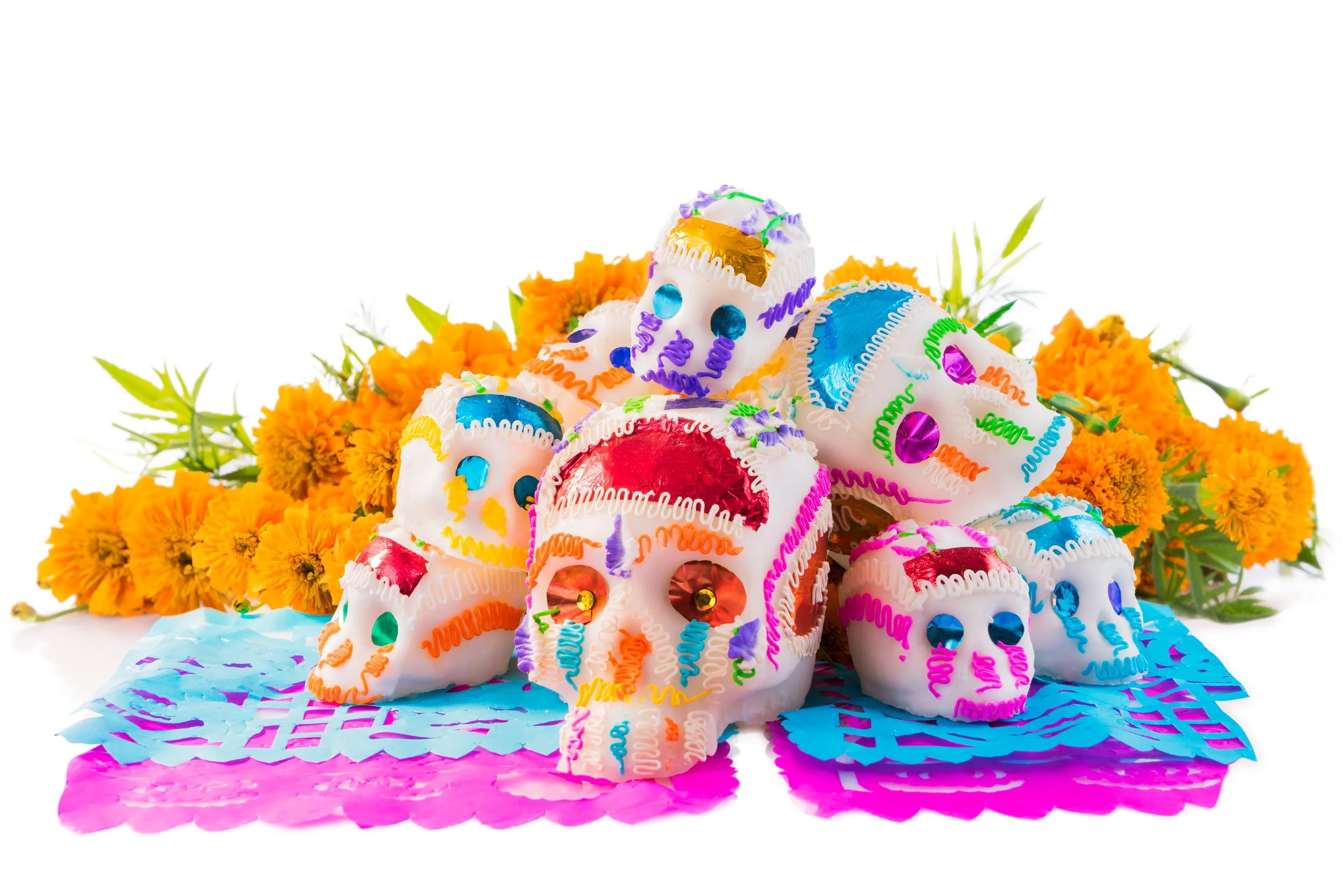
In modern urban centers of Mexico, Día de los Muertos bursts forth with color, music, and laughter, almost a playful defiance of death itself. Streets fill with dancing and celebration, a reminder that death is part of life’s great fiesta. Marigolds and papel picados banners still flutter everywhere, but now sugar skulls, face paint, and tequila shots join the offerings, reflecting the bold, irreverent spirit of the living as they toast the memory of those who have gone before.
Step 1: Create an altar to honor your ancestors. A traditional ofrenda altar has several levels, crowned by an arch to represent the gateway between worlds. Don't worry, a small altar is just as powerful. Choose which ancestors, deceased friends, or beloved animals you wish to invite into this sacred space. You may honor many on a single altar, weaving their memories together. Place photographs of the departed on the altar, inviting their presence into your home and heart. You might also place a symbolic object to call in a distant ancestor you have never known, inviting them to visit and share their blessings.
Step 2: Place offerings for your ancestors. Once your altar is prepared, adorn it with offerings that welcome and delight your beloved dead. A traditional ofrenda might include:
Candle – to light the way for the ancestors’ return.
Earth – in gratitude for the ground we stand upon, our current home.
Water, Soap & Towel – to refresh and cleanse the spirits after their long journey.
Incense – traditionally copal, but any fragrance will do, carrying prayers heavenward.
Papel Picado – colorful paper banners that flutter to represent air.
Salt – to purify the space and protect it.
Flowers – marigolds or other autumn blooms to guide the spirits.
Food – the departed’s favorite dishes, along with bread and seasonal fruits.
Beverages – coffee, tea, beer, or another favorite drink to quench their thirst.
Personal Objects – clothing, jewelry, or treasured mementos that remind you of them.
Skeletons – sugar skulls or folk art that symbolizes the joyful dance of life & death.
Small Dog Figure – representing the loyal guide who escorts souls across the threshold.
Each item becomes a message: "You are remembered. You are welcome. You are loved."
Step 3: Gather on November 1 or 2 with family and friends. Invite family and friends to join you in this celebration of remembrance. Sit together around the altar, share stories, or sing songs, letting laughter and tears mingle freely. Offer gratitude for the relationships, past and present, that give your life meaning. Before the gathering ends, speak aloud an invitation for your departed loved ones to visit you in dreamtime, bringing their wisdom, comfort, and guidance.
Resources for the Day of the Dead One of my favorite places to explore all things related to Día de los Muertos is the Mexican Sugar Skull Store. They offer detailed instructions for making your own sugar skulls, information about building a traditional ofrenda, and everything from papel picado to vibrant folk art to bring your altar to life.
Bring children into the celebration by watching Pixar’s colorful animated film Coco, a beautiful reminder that “nothing is more important than family.” Let the music fill your home, especially the tender song Remember Me as a way to invite your ancestors closer.
And stay tuned. My new eBook, How to Celebrate the Day of the Dead, will be released in mid-October with even more ideas and inspiration!