Lost Enough to Find Yourself
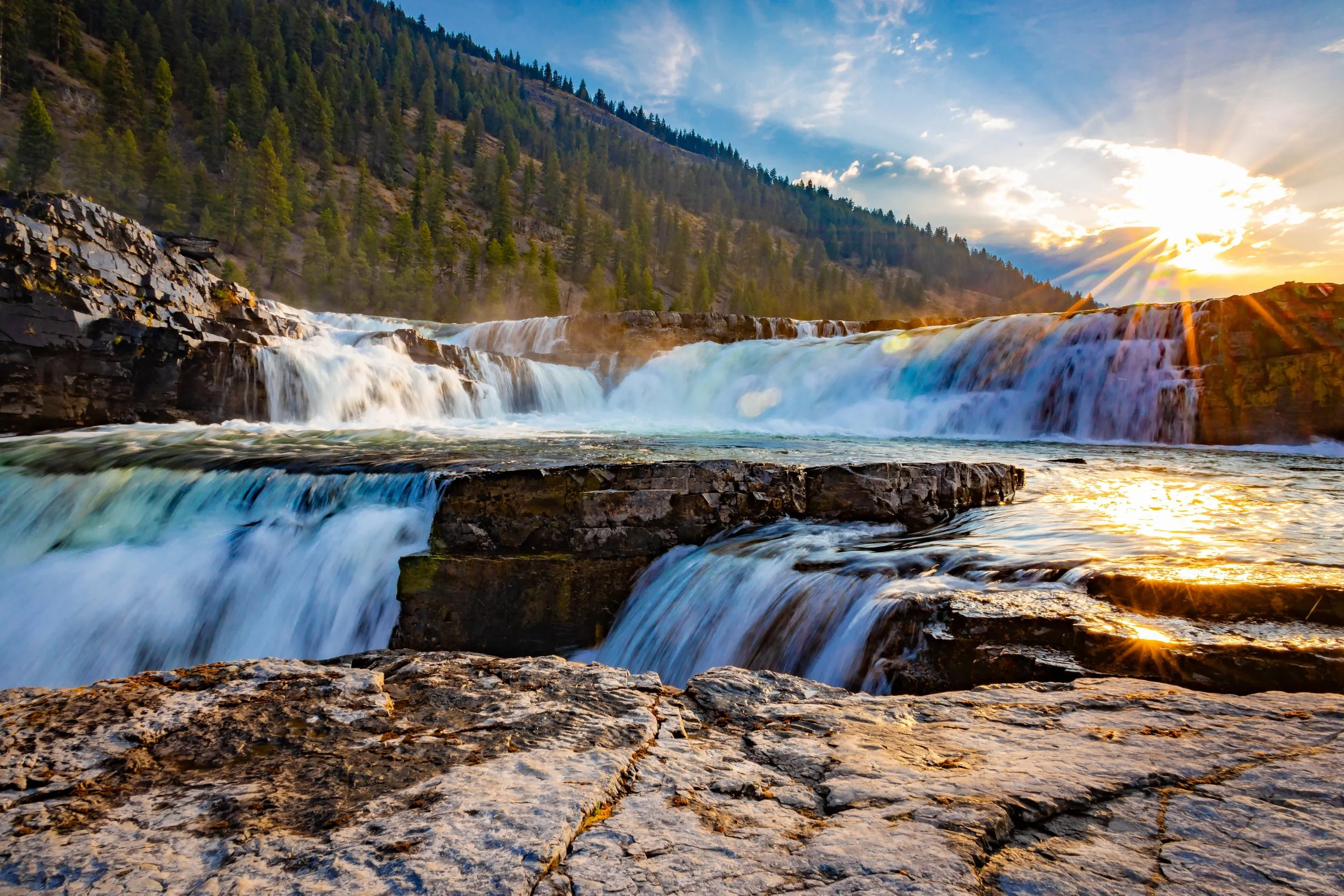
“And if you're lost enough to find yourself... Here are your waters and your watering place. Drink and be whole again beyond confusion.”
— Robert Frost, Directive
Lost Enough to Find Yourself
There are moments in life when the old maps stop working.
The role you inhabited for years no longer fits: the relationship, the career, the belief, the version of yourself you carried so carefully. Something has ended, or is ending, and you find yourself in unfamiliar terrain.
This is not a problem. This is a threshold.
At moments like these, most of us look forward toward goals, plans, next steps, new beginnings. And eventually, that forward motion is exactly right.
But there is something that needs to happen first.
Before you can know where you are going, it helps — more than most people realize — to understand where you have been. Not to relive it. Not to judge it. But to find, within the story of your life so far, the thread that is most essentially you.
Life review is a navigational tool, available at any age. It is most powerful precisely when the ground has shifted beneath you.
A life review is not something you do at the end of a life. It is something you do at the end of a chapter, any chapter, when you need to gather what you have learned, release what you no longer need, and gain greater clarity about who you actually are.
When we are willing to stand in the disorientation of a transition, not rushing past it, we can finally ask: What has this journey made of me?
This month, consider the cascades in your life. A cascade is a series of small waterfalls, water descending over rocks in rapid succession, one transition leading to the next. Unlike a single dramatic waterfall, a cascade is multiple, sequential, and cumulative.
When a river flows across the earth's surface, it doesn't encounter uniform material. The ground beneath is a patchwork of different rock types, hard rocks like granite or basalt, soft rocks like shale or sandstone. At the contact zone, hard rock holds firm as soft rock erodes more quickly. It is at this boundary where the cascade forms.
The river did not create this boundary. It was already there, written into the landscape long before the water arrived.
So it is with the endings that begin our greatest transitions. Something in us holds firm: a relationship, a belief, a way of being in the world. And something beneath it has been slowly, quietly yielding. We rarely see erosion while it is happening. We only feel the moment when the ledge gives way and we find ourselves falling.
Knowing the difference between what is meant to hold and what is meant to yield is one of the great gifts of looking back at a life.
I invite you to look back at your own cascades, the boundaries where something held and something yielded, and discover what they have made of you.
If this resonates, I've prepared a practice to take it deeper.
Ritual Practice
Your River of Life — Explore the Cascades in Your Life
The geological forces that create a cascade — the fault lines, the variations in rock hardness, the ancient glacial history — were laid down long before the water ever arrived. In life, the transitions we navigate have often been forming for years before we finally feel the drop.
The cascade is a vital part of the river’s journey, not a departure from it. The water descends, churns, and sprays, eventually gathering itself in the pool below. These moments of falling, of losing footing, of sheer turbulence are not interruptions to your life; they are your life, simply moving through a different terrain.
Falling into a cascade is often a necessary progression. From there, the river slips through a series of small drops and quiet pools, until at last it softens into a steady, peaceful meander.
The experience of a cascade is never passive. It carves, smooths, and deepens, shaping something entirely new over time. Every meaningful transition does the same; it reshapes the terrain of who we are. The person who gathers in the pool below is never the same one who first stood at the edge.
This month, I invite you to explore through journaling a cascade in your own life. Remember, transitions begin with an ending, a letting go that makes movement possible. The ending makes room for the new beginning.
Below is a series of questions to guide your reflection on a cascade in your life, a sequence of at least three transitions, one leading into the next. Not every question will resonate. Choose the ones that call to you and allow your responses to unfold gently.
Move through each step in sequence, pausing between descents. The full shape of the cascade will reveal itself gradually.
Step 1: Where You Began
Stand, for a moment, in the quiet reach of the river. Remember who you were before you were drawn into this transition.
What were your goals?
What beliefs shaped your path?
What fears lived just beneath the surface?
Step 2: At the Edge
What name do you give this transition?
What did you sense, even before you stepped forward?
What was ending, or asking to be released?
What hesitations or longings gathered at the edge?
What called you onward, even if you did not yet trust the path?
Step 3: In the Descent
What did it feel like to let yourself fall into the cascade?
Where did you lose footing, certainty, or control?
What within you remained steady as everything else churned?
What began to loosen, dissolve, or be carried away?
Who or what appeared in the turbulence to guide, witness, or challenge you?
Step 4: In the Pool Below
What remains as the waters begin to settle?
How have you been reshaped by this passage?
What new understanding, strength, or tenderness has emerged?
What have you gathered from this experience that you will carry forward?
As you rest here, what feels complete and what quietly begins again?
You have now crossed the first threshold of this cascade in your river of life. Take a moment to steady yourself. Notice where you are before approaching the next drop.
When you are ready, you may move through these steps again, following the flow through each successive descent, allowing the full shape of the cascade to reveal itself.
Resources & Inspirations
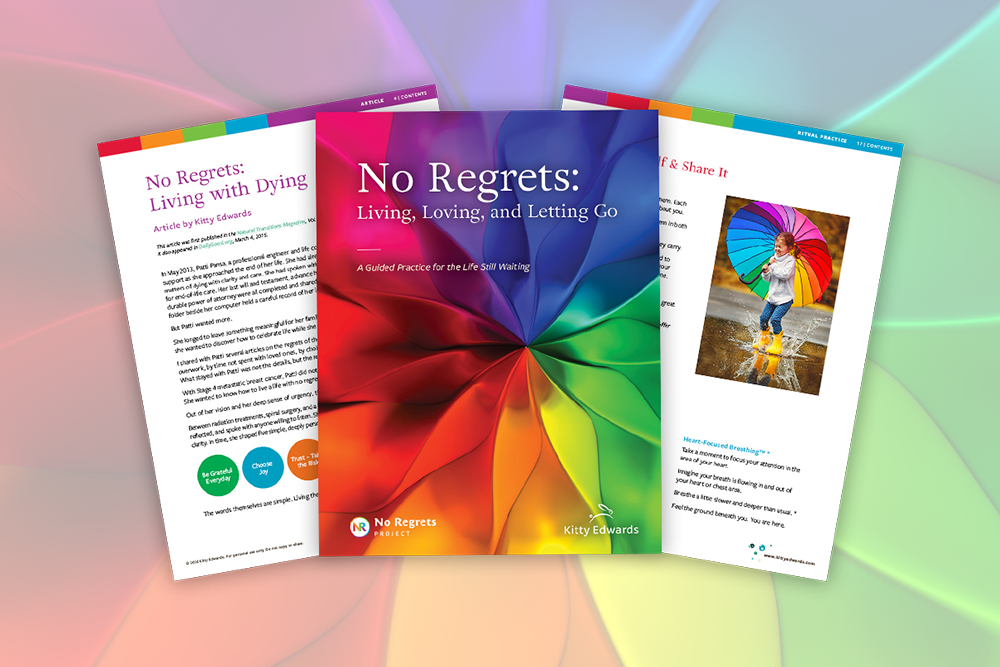
No Regrets: Living, Loving and Letting Go by Kitty Edwards
What if your regrets could become doorways to a more meaningful life?
In this gentle, practical guide, you’ll be introduced to the five practices of the No Regrets Project, simple yet powerful ways to release what weighs you down, and transform regret into wisdom, presence, and self-compassion.