“I long to accomplish a great and noble task; but it is my chief duty and joy to accomplish humble tasks as though they were great and noble.”
— Helen Keller, Optimism: An Essay
What the River Sets Down
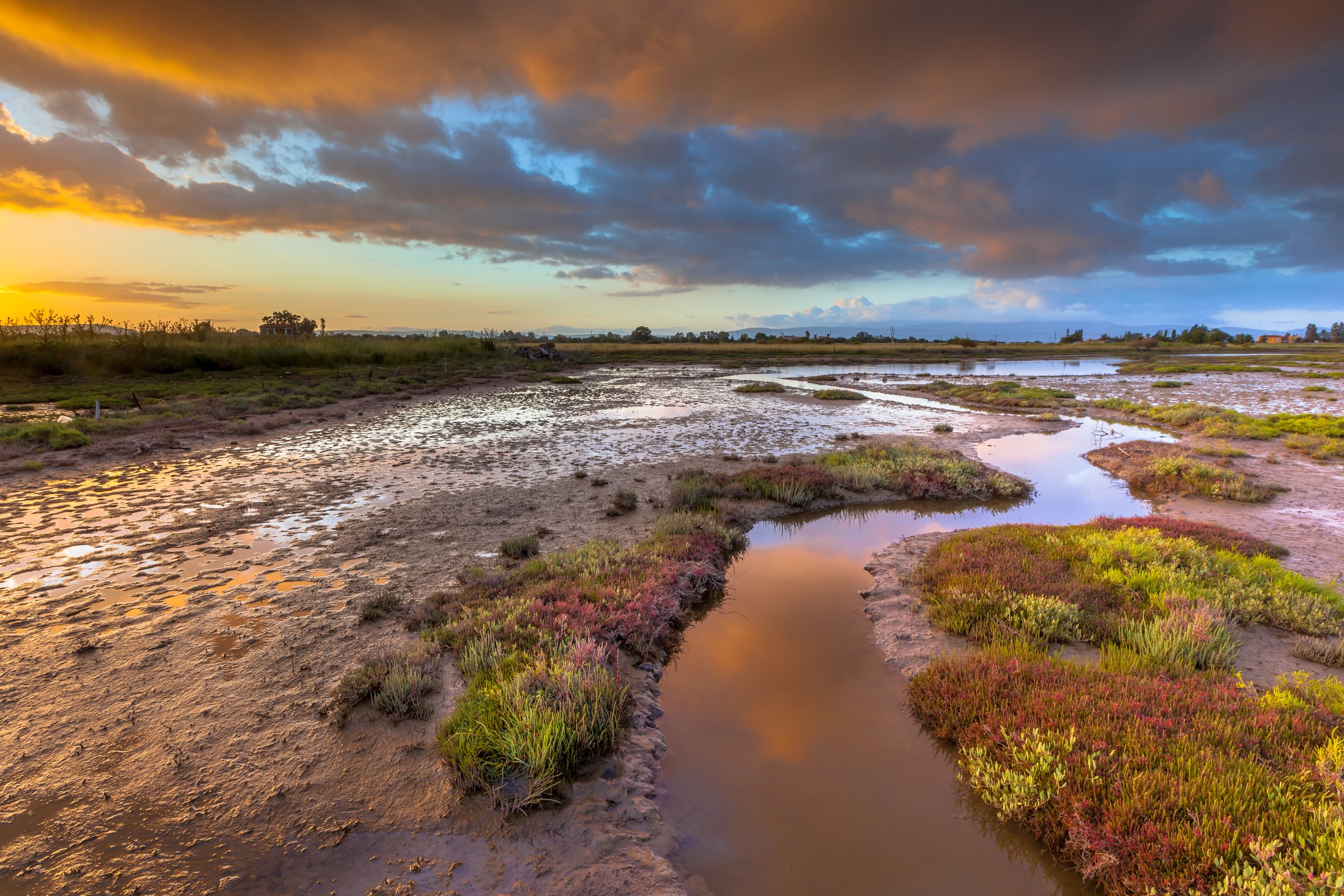
As the river nears the coast, the land flattens, the channel widens, and the current slows.
The salty tide reaches inland to greet it, and the river begins to lay down what it has carried from the mountains: silt, sediment, the long story of its journey. From these deposits, marshes grow. Young fish find shelter. New life begins.
This is legacy, a natural gift to the world.
Have you begun to wonder what you will leave behind? I have. Maybe it’s my age, or maybe the Sage has taken me into her keeping. I seem to have the long view now, the kind that comes from living through many cycles. I can hold outcomes more lightly. I can witness without needing to fix, trusting that others will learn their own lessons.
The elder years feel like this to me. The pace slows and life widens. There is more room to observe, reflect, and appreciate what has been.
The sea, the great unknown, reaches inland on its own rhythm: through losses, diagnoses, the funerals of friends, moments of sudden awareness. These come and go like tides, long before the final arrival. My water has turned brackish, no longer only the river I was but not yet the sea.
Between the tides there is slack water, the moment when the flood has peaked and the ebb hasn’t yet begun. For a breath, everything is still. In that stillness I’ve begun to notice what I’m carrying, and what I’m ready to set down.
Throughout our journey down the River of Life, we have explored the experiences that shaped us. Now, as the river approaches the sea, another question arises: What becomes of everything we have gathered along the way?
An estuary offers three gifts, each a different expression of legacy.
It is a nursery. Young life grows strong in its sheltered waters before heading out to sea. Many of my friends are caught up in caring for their grandchildren. Others mentor younger colleagues, teach a neighbor’s child to garden, or simply show up, year after year, as a steady presence for someone just beginning.
It is a filter. Marsh grasses and oyster beds help clear the water before it reaches the ocean. This is the legacy of discernment: making amends, letting old grudges dissolve, choosing which family stories to pass on and which patterns will end with us. Sometimes our greatest gift to the next generation is what we choose not to carry forward.
It lays down sediment. The river gives up what it has gathered so new ground can form. Some friends volunteer at food pantries or sit with others to share memories. Some record family stories, trace family trees, pass down recipes in their own handwriting, or give away treasured objects with the stories behind them. Others write letters to be opened after they’re gone. And some of us write our own obituaries, not out of morbidity, but to name, while we can, what our lives have meant.
An estuary doesn’t strive to leave a legacy. It simply lets go of what it carries, and that becomes ground for new life. Perhaps we don’t need to build our legacy at all. Perhaps we only need to set it down.
Ritual Practice
Your River of Life — Legacy Letters
An estuary is a place of exchange. Fresh water meets salt, sediment settles, and new life takes root. What the river carries becomes nourishment for what follows.
A legacy letter is your estuary. It is the place where what you have carried meets those who come after you.
For thousands of years, people have passed down their wisdom through stories, blessings, and words of guidance. Legacy letters carry this ancient tradition forward, gathering what we have learned and what we hope to leave with those we love.
A legacy letter is a gift of love, a personal expression of what matters most. You might write one at a threshold: a birth, a marriage, a retirement, a loss, a diagnosis.
Some are delivered in the moment. Others are kept safe until after you are gone.
It is not a thank-you note, though gratitude may live in it. It is not a birthday card, though it may carry a memory and a wish. It is something deeper: what you most want them to know.
For someone facing a terminal illness, writing legacy letters can be deeply healing, easing the fear of being forgotten. Yet their value extends far beyond the end of life. At any age, writing a legacy letter can help us recognize the lessons we have learned and the love we wish to pass on.
Tips for Writing Your Legacy Letter
Write to one person. Hold them in mind and set an intention before you begin.
Limit your writing to fifteen minutes. You can return to your letter whenever you wish.
Tell a story. A shared memory carries more than advice ever can.
Write in your own voice, the way you would speak to them at your kitchen table.
Sediment: What You Carry Begin by gathering the fragments of your story. Simply let your thoughts flow.
What stories do I want to outlive me?
What did I learn too late, or just in time?
Whose voice still travels in mine?
Brackish Waters: What We Hold and Release Here the waters mix. Name what is tender, unfinished, or both.
What do I need to say thank you for?
What forgiveness do I need to ask for, or offer?
What can I release so it doesn’t flow downstream to them?
Nursery: Blessings for What Comes Next Offer blessings rather than instructions. Speak to them directly:
What do I see in you that you may not yet see?
What do I hope for you when I am no longer here?
When you miss me, remember…
When you finish, stir a pinch of salt into a bowl of fresh water. Watch as the two waters become one. As you seal your envelope, touch a wet fingertip to its edge, honoring the meeting of your story with the life of the person who will receive it.
Decide when your letter should be received. You may give it now, save it for a special occasion, or leave it to be discovered after your death.
As a ritual, make a list of the people you want to write to and complete the letters one by one. Or choose a few to receive a letter on a recurring rhythm, like the tide returning: every birthday, every anniversary, every year.
We do not need to wait for the end to say what matters most. One letter, one person, fifteen minutes are enough to begin. What we write today becomes a voice our loved ones can return to, long after we have reached the sea.
Resources & Inspirations
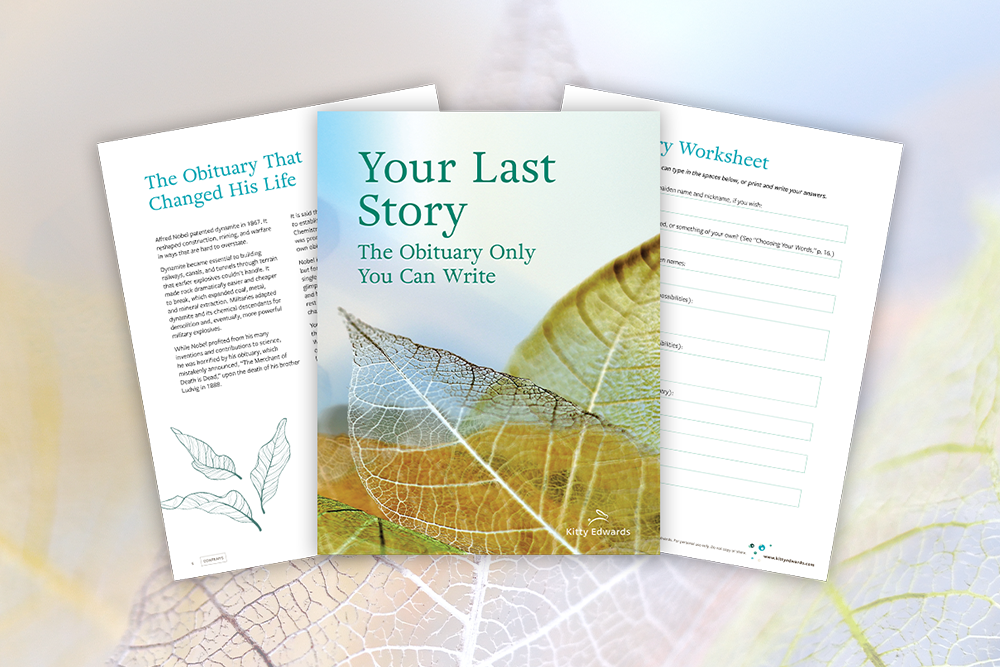
Your Last Story
The Obituary Only You Can Write
by Kitty Edwards
No one knows your life quite as you do. Writing your own obituary gives you the opportunity to tell your story in your own voice.
In Your Last Story: The Obituary Only You Can Write, you’ll explore why writing your own obituary is an act of clarity, not morbidity. You’ll find prompts, real family examples, and the Warrior, Seeker, and Sage archetypes to help you find the words only you can write. Ask your friends and family to help, too. They often remember you in ways you have forgotten.
Don’t wait. Start writing now.
Life and Loss: Legacy Writing in The Age of COVID-19
by Rachael Freed
Learn more on Amazon
Rachael Freed’s newest book, Life and Loss: Legacy Writing in the Age of COVID-19, is written for those whose lives were changed by the pandemic. It stands at the meeting point of what we learned and what we lost.
Legacy writing that harvests the wisdom of those years can help us heal and leave future generations a practical road map for the next world-changing crisis.
Freed’s classic, Women’s Lives, Women’s Legacies: Passing Your Beliefs & Blessings to Future Generations (2003), has been a favorite of mine for years and remains a wonderful resource for women or men who want to write legacy letters.