
What are the Chapters in Your Life?
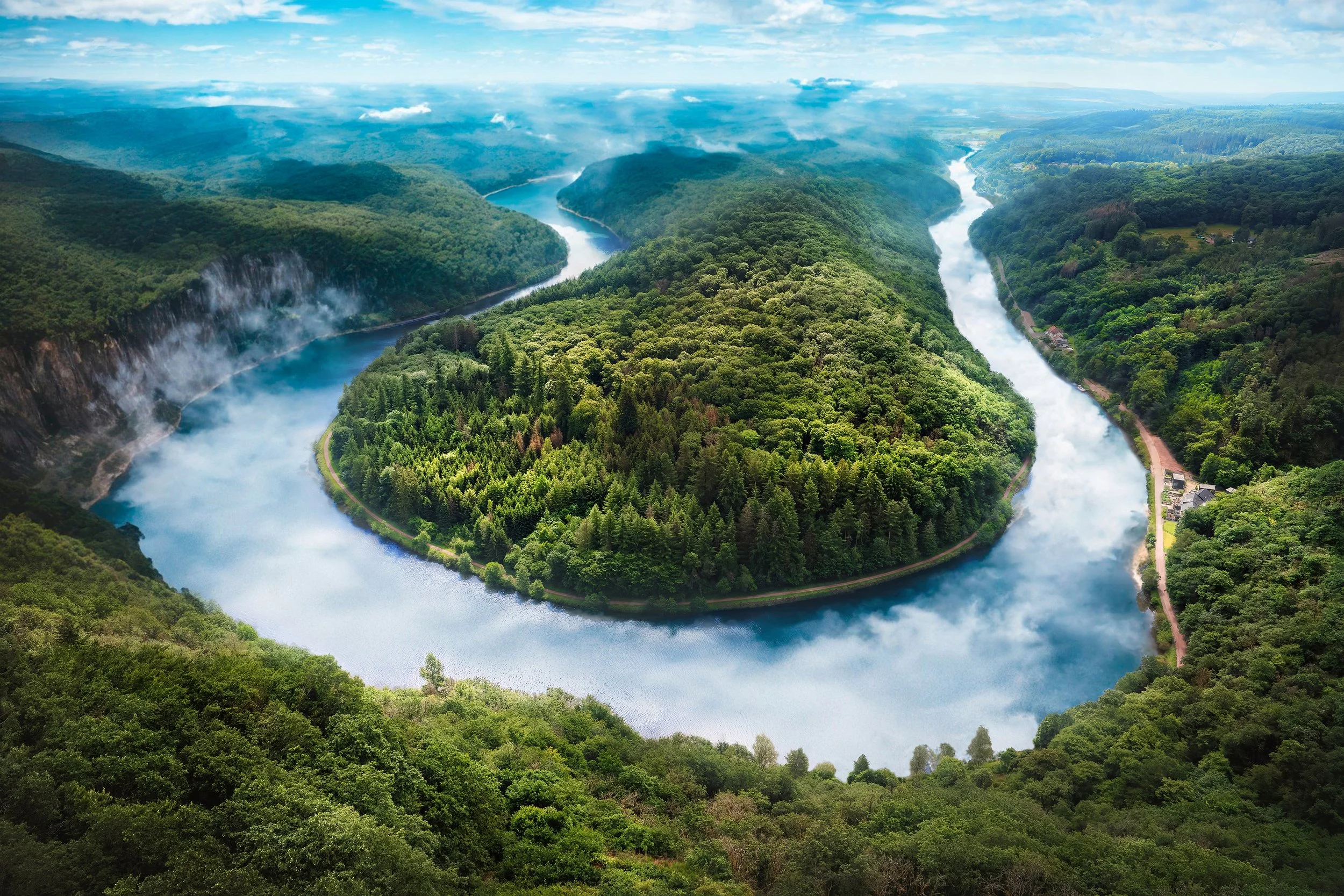
“No man ever steps in the same river twice, for it’s not the same river and he’s not the same man.”
— Heraclitus
A Life Review — Map the Chapters in Your Life
I am continually amazed by how rivers have taken up residence in my dreams and thoughts as I walk the dog, drive to the store, or sit quietly sipping my tea. Reflecting on the confluences in my life has drawn my attention to those who helped me open my heart, develop essential skills, and take risks far beyond what I once believed possible. I feel deep and abiding gratitude for these influences.
There is a question I now realize I should have included in the confluence ritual practice: How did I shape others at our confluences?We often underestimate the influence we have on one another, for better or for worse. It is difficult to measure, perhaps because it is not a conversation we are accustomed to having. Still, it lingers, quiet, honest, and worthy of reflection.
This month, I invite you to return to your river of life and gently map its bends and meanders. Straight channels are efficient, but rivers come alive when they curve. The current slows. Transitions unfold. We move from one state of being to another, turning back on ourselves just enough to gather what serves us and release what no longer needs to be carried.
Rivers do not meander randomly; they seek equilibrium, a balance between energy and resistance. In life, not all wandering is lost. Sometimes we are discovering our natural pace, testing our boundaries, exploring who we are becoming.
As you reflect on the bends or chapters of your life, resist the urge to see them only from an aerial view. Take time to descend to the surface of your river, where the stories longing to emerge are given room to speak.
Notice how your river begins to bend when it is no longer pulled forward by destination alone. What arises in the bend is often what is ready to be integrated.
Memory itself is associative rather than chronological. We do not remember in straight lines. A scent, a song, a simple question and suddenly we find ourselves standing in familiar emotional waters, carrying memory in a different body, with a quieter, wiser awareness.
Regrets may surface at these bends, where the current slows and reflection becomes possible.These moments are not signs of failure but invitations to live more consciously. Like sediment settling in a meander, regret carries weight. It also carries nutrients. Over time, it enriches the banks of our lives, shaping deeper compassion, clearer values, and more intentional choices downstream.
If, on this journey of discovery, grief or regret arises, I invite you to pause and download my Well of Grief Ritual eBook. This guided practice creates space for grief to be expressed so that the wisdom within regret can surface.
The work of mapping our meanders is both deeply personal and profoundly universal. Every human river bends, slows, and curves back upon itself. In tracing your own path, you join countless others who have paused to ask: What has shaped me? What have I shaped? And what might I still become?
Each life is unique, full of wonder and mystery. Do not be afraid to explore as you contemplate where you have been and where you are going.
Ritual Practice
The River of Life: Bends & Meanders
Everyone experiences bends in their rivers. In natural systems, straight channels are rarely stable for long. Meandering distributes energy more evenly along a river’s length, creating balance and resilience.
Meanders often begin with a small disturbance such as a fallen log, an animal burrow, a rock shifting the current just enough to alter its course. One subtle deflection creates a new pattern. In life, a meander may begin with a chance encounter, a change in circumstances, a question, a loss, or one of those small disruptions that gently or abruptly redirect us.
Your own sequence of bends may have a natural rhythm, a characteristic distance you travel before curving back toward center. When we enter new waters, old certainties gradually erode, and fresh experiences settle along the banks, reshaping the landscape of who we are becoming.
Step into the image. Close your eyes or soften your gaze. Allow the bends of your river to appear. Notice where it curves and gathers itself.
How many bends reveal themselves?
Where does the current slow?
Where does the water widen and deepen?
What seasons of your life rest within those arcs?
Consider the forces that shape your river’s bends. Along the outer bank, the current runs swift and strong, wearing away the shoreline. Along the inner bank, the water slows, and sediment gathers. Over time, the bend strengthens itself: the outer edge yielding, the inner edge building, the curve growing more pronounced with each passing season.
Our bends are often marked not by what we carefully chose, but by what life quietly or insistently asks of us.
When did your life change direction rather than simply move ahead?
What small disturbance initiated the meander?
Which experiences carved away old certainties?
What new strengths, capacities, or relationships were gently deposited?
Pause there. Notice what has been shaped not only by erosion, but by accumulation.
Remember the oxbow lakes or paths untaken. Occasionally, an extreme meander cuts itself off from the main current, creating a separate lake. The river finds a straighter course. The old loop forms an oxbow lake: still, distinct, slowly filling with sediment.
Is there a path you once followed deeply, only to leave behind?
What identity loop was cut off when you returned to a straighter course?
Can you honor that oxbow without judgment? It was your river for a time.
If these reflections stir grief or regret, pause gently with what arises. Allow your feelings the space they require. You may find it supportive to sit with the Well of Grief Ritual, a quiet practice designed to help you meet these emotions with compassion and discover the wisdom they carry.
What lies beyond the next bend? We do not meander because we are lost. We meander because we are seeking balance as we redistribute life’s energies and discover a path that is more sustainable, more honest, more our own. The curves invite us to slow down, to lay down what we have gathered, and to release what no longer needs to be carried.
Where do I feel the current drawing me, even if I cannot see around the bend?
Am I moving at my own pace or carried by currents that are not truly mine?
Who else is being shaped by the course I am charting now?
What one truth might I whisper to my future self who is waiting just beyond the curve?
Trust that your river knows how to find its way. Each bend holds possibility. What lies ahead may not yet be visible, but it is already shaping you into who you are becoming.
Resources & Inspirations
The Good Life: Lessons from the World’s Longest Scientific Study of Happiness by Robert Waldinger, MD and Marc Schulz, PhD (2023) Learn more on Amazon
The Good Life is drawn from the Harvard Study of Adult Development, an eighty-year exploration of what truly shapes wellbeing. Following participants across the full arc of their lives, the research reveals that wealth, status, and achievement are not the strongest currents of a meaningful life. Instead, it is the quality of our relationships that most powerfully influences our health, happiness, and longevity.
Like tributaries feeding a river, supportive connections sustain us through every bend and season. Warm relationships help buffer life’s rapids, steady us in times of erosion, and nourish us as we age. The authors remind us that good relationships are not perfect ones, they require attention, repair, and presence. Yet it is this ongoing tending that allows our lives to flow with greater vitality and purpose.
The Power of Regret: How Looking Backward Moves Us Forward by Daniel H. Pink (2022) Learn more on Amazon
Daniel Pink argues that regret is not something to avoid, but a natural part of being human, a teacher that appears when we pause long enough to look back with honesty. Like the bends in our river where the current slows and reflection becomes possible, regret surfaces not as punishment but as information. When we engage with regret thoughtfully rather than ignoring it, suppressing it, or dwelling on it endlessly, we can extract its wisdom and use it to make better choices moving forward.
Pink identifies four core categories of regret that resonate deeply with life review work: foundation regrets, moral regrets, boldness regrets, and connection regrets. Within each category, we face regrets of commission (actions we took) and omission (chances we didn't take). By examining our regrets with compassion and curiosity, asking what they reveal about our deepest values and truest selves, we gain both clarity about what matters most and motivation to live more intentionally.
The Top Five Regrets of the Dying: A Life Transformed by the Dearly Departing by Bronnie Ware (2019, originally published in 2012) Learn more on Amazon
Drawing from her years in palliative care, Bronnie Ware shares the common regrets expressed by people in their final weeks of life. Their reflections rarely centered on status or achievement, but on love, courage, authenticity, and time left unshared.
In this popular book Ware identified five recurring regrets expressed by people in their final weeks of life. After years working in palliative care, she found remarkable consistency in what mattered most at the end:
“I wish I’d had the courage to live a life true to myself, not the life others expected of me.”
“I wish I hadn’t worked so hard.”
“I wish I’d had the courage to express my feelings.”
“I wish I had stayed in touch with my friends.”
“I wish that I had let myself be happier.”
The message is ultimately hopeful: by witnessing what people regret at life's end, we're given the gift of course-correction while we still have time to bend our rivers toward what truly matters.